 Book Online
 (519) 704-4000
 Emergency?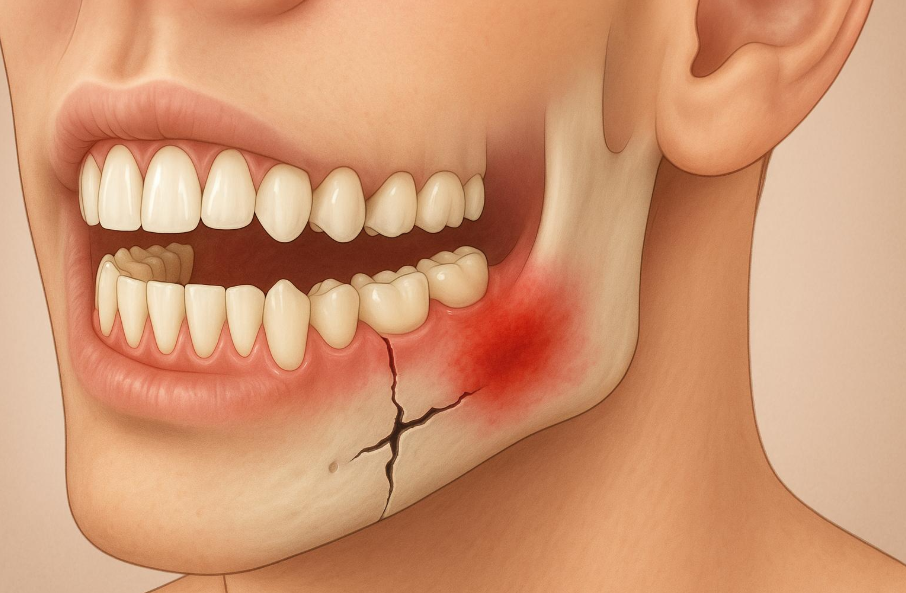
When a sudden impact happens—whether from a sports collision, a trip and fall, or an accidental bump to the face—most people immediately check the mirror for a missing or chipped tooth. A visible crack in your enamel demands attention. It looks dramatic, feels sharp against your tongue, and makes you reach for your phone to book an appointment right away.
However, there is a far more serious casualty that often goes unnoticed in the moments following facial trauma: your jaw.
While a chipped tooth is certainly an issue that requires dental repair, jaw trauma can have compounding, long-term effects on your bite, jaw joints, facial nerves, and overall oral health. Understanding why jaw trauma deserves immediate professional evaluation—and why you should visit an emergency dentist in Brights Grove even if your teeth appear intact—can save you from months or years of chronic discomfort.
The Visible vs. The Hidden Threat
A chipped tooth is easy to identify. Enamel breaks, exposing the lighter dentin or sensitive inner nerve. Because it is visible and often painful, it naturally becomes the primary concern.
Jaw trauma, on the other hand, operates under the radar. The temporomandibular joints (TMJ)—the complex hinge joints on either side of your head that connect your lower jaw to your skull—and the surrounding muscles absorb significant force during an impact. Even if no bones fracture, this force can cause micro-tears in ligaments, disc displacement, internal joint bleeding, or structural stress within the jawbone itself.
Because these soft tissue and joint injuries don’t leave an obvious gap in your smile, many people ignore the initial stiffness or mild ache, assuming it will simply heal on its own.
What Happens When Jaw Trauma Goes Untreated?
Ignoring a jaw injury can lead to progressive conditions that are far more difficult and costly to treat than a standard dental restoration:
- TMJ Dysfunction & Disc Displacement: The shock of an impact can knock the small cartilaginous disc inside the joint out of position. This leads to painful popping, clicking, or even total locking of the jaw when opening or closing your mouth.
- Bite Misalignment (Malocclusion): A shift in the jaw position, even by a fraction of a millimetre, alters how your top and bottom teeth come together. Over time, an uneven bite causes premature wear on healthy teeth, headaches, and muscle fatigue.
- Hairline Fractures: Small cracks in the mandible (lower jaw) or maxilla (upper jaw) may not cause immediate deformity, but chewing pressure can exacerbate them, leading to severe infection or displacement.
- Delayed Tooth Loss: Trauma to the jaw can sever or damage the blood supply to the roots of nearby teeth, causing pulp necrosis weeks or months after the initial incident.
Warning Signs of Jaw Injury
If you have experienced a blow to the head, chin, or face, monitor yourself closely for these subtle symptoms:
- Pain or tightness near your ears or temples when chewing
- A popping, clicking, or grating sound when you open your mouth
- The sensation that your teeth no longer line up comfortably when you bite down
- Difficulty opening your mouth wide or locking in a partially open/closed position
- Persistent neck pain, earaches, or tension headaches post-impact
Don’t Wait: Get an Emergency Assessment
When facial impacts occur, immediate assessment is vital. If you suffer an injury, reaching out to an emergency dentist in Brights Grove ensures a comprehensive clinical examination, proper digital imaging, and early intervention to stabilize the joint and surrounding structures.
At Lakeside Family Dental, our team is equipped to evaluate both surface-level dental damage and underlying jaw trauma following an accident. If you or a family member experiences facial impact, don’t wait for chronic pain to set in. Contact our office or visit Lakeside Family Dental to schedule a priority evaluation.